Festivals of Nepal: When to Visit for Cultural Experiences
- rockykauffmanmarke
- May 24
- 5 min read
Prayer flags flutter above mountain trails. Oil lamps glow across village homes during Tihar. Monks in colorful masks dance inside ancient monasteries while trekkers gather quietly to watch. Nepal’s festivals feel deeply connected to everyday life, not staged performances for tourists.
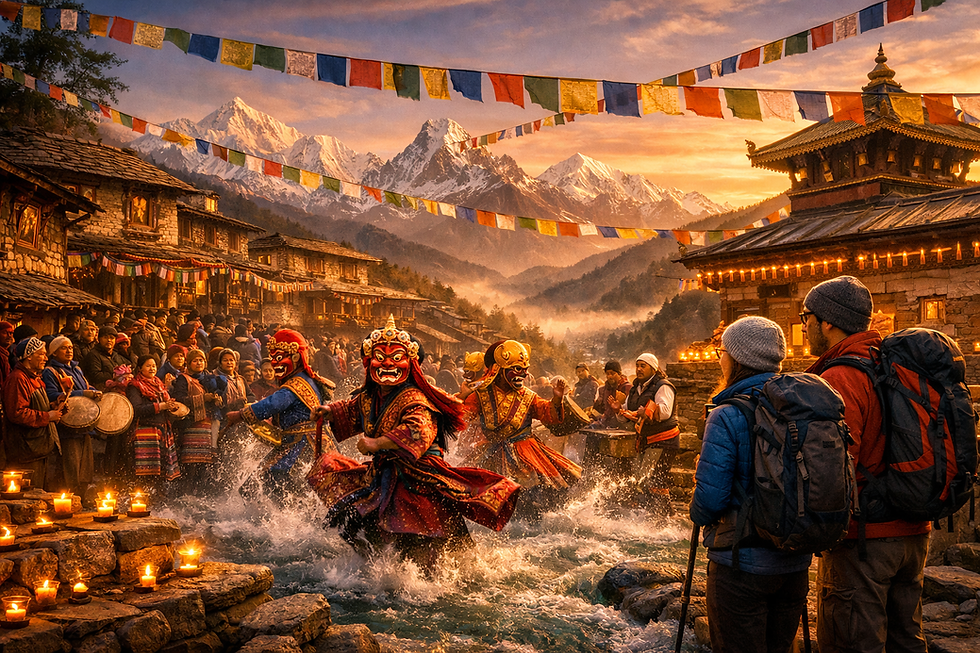
Many travelers visit Nepal for trekking, but the country’s cultural side often becomes the most memorable part of the journey. Time your trip well, and you can walk through Himalayan villages during harvest celebrations, Buddhist ceremonies, and colorful street festivals. From autumn’s biggest Hindu celebrations to remote monastery festivals in the mountains, Nepal offers cultural experiences in every trekking season.
Why festivals are central to Nepalese life
Nepal celebrates hundreds of festivals each year. Hindu and Buddhist traditions shape daily life across the country, and many communities follow local customs passed down for generations. Even neighboring villages may celebrate the same festival differently.
For travelers, festivals create a rare chance to see local life beyond trekking routes and tourist areas. Families gather for meals, temples fill with music and prayer, and village squares become social spaces late into the evening. In mountain regions, trekkers sometimes arrive during celebrations completely by surprise.
This cultural connection adds another layer to trekking adventures in Nepal. Routes like the Everest Base Camp Trek or the Annapurna Base Camp Trek often pass through villages preparing for local festivals during peak trekking seasons.
Dashain and Tihar: Nepal’s biggest festival season
Autumn brings Nepal’s most important festival period. Clear mountain skies and stable trekking weather also make this the busiest travel season.
Dashain
Dashain usually falls between late September and October. It is Nepal’s longest and most widely celebrated Hindu festival. Families travel home from cities, elders give blessings to younger relatives, and homes are decorated with bamboo swings and colorful kites.
Travelers visiting during Dashain often notice quieter cities at first because many locals return to their hometowns. Village areas, however, become lively gathering places filled with music, food, and family celebrations.
Popular trekking routes like the Mardi Himal Trekking and the Everest Base Camp Trek with Helicopter Return are especially beautiful during this season thanks to clear mountain visibility.
Tihar
A few weeks after Dashain comes Tihar, Nepal’s festival of lights. Homes glow with oil lamps and colorful decorations after sunset. One of the most unique parts of Tihar is that different days honor animals including dogs, cows, and crows.
In cities and villages, groups perform Deusi-Bhailo songs while visiting homes at night. Streets feel energetic but warm rather than chaotic. Pokhara becomes particularly beautiful during Tihar because of the reflections of lights across the lakeside area.
Himalayan Buddhist festivals trekkers should not miss
Nepal’s mountain regions also host some of the Himalayas’ most fascinating Buddhist festivals.
Mani Rimdu in the Everest region
Mani Rimdu is one of the best-known monastery festivals in Nepal. It takes place at Tengboche Monastery in the Everest region, usually during autumn. Monks perform masked dances, prayers, and ceremonial rituals over several days.
Trekkers on the Everest Panorama Trek or the Gokyo Valley Trek may have the chance to experience this festival while surrounded by Himalayan peaks.
The atmosphere feels very different from city festivals. Instead of loud crowds, there is a quieter spiritual energy inside the monastery grounds.
Tiji Festival in Upper Mustang
The Tiji Festival is celebrated in the remote kingdom-like region of Mustang. Traditional dances and storytelling rituals symbolize the victory of good over suffering.
Because Upper Mustang sits in Nepal’s rain shadow area, it is one of the few trekking destinations suitable even during parts of the monsoon season. The Upper Mustang Trekking route becomes especially popular during festival periods.
Festivals in Manaslu and Tsum Valley
Remote Buddhist villages in Manaslu and Tsum Valley preserve traditions that feel untouched by modern tourism. Prayer ceremonies, monastery gatherings, and seasonal celebrations happen throughout the year.
Treks such as the Tsum Valley Trek and the Manaslu Circuit Trek offer a more traditional cultural experience compared to busier trekking regions.
Spring festivals and colorful celebrations
Spring in Nepal feels completely different from autumn. Forests bloom with rhododendrons, temperatures become warmer, and colorful festivals fill cities and villages.
Holi
Holi, the festival of colors, usually takes place in March. Streets turn into playful spaces where locals and travelers throw colored powder and water at each other. Kathmandu and Pokhara host the largest celebrations.
The atmosphere is energetic, messy, and surprisingly welcoming for visitors. White clothes rarely stay white for long.
Trekkers often combine spring festivals with shorter routes like the Poon Hill Trek 4 Days or the Dhampus Sarangkot Trek because spring weather is comfortable for both cultural tours and trekking.
Buddha Jayanti
Buddha Jayanti celebrates the birth of Buddha and holds special importance in Buddhist communities. Monasteries become gathering places for prayers, butter lamps, and ceremonies.
Swayambhunath and Boudhanath in Kathmandu attract large crowds during this time, though smaller mountain monasteries often provide a quieter experience.
Best seasons to combine festivals with trekking
Autumn remains the best overall season for combining trekking and festivals in Nepal. The weather is stable, mountain views are clear, and major celebrations like Dashain, Tihar, and Mani Rimdu take place during these months.
Spring comes next. Warmer temperatures, blooming hillsides, and colorful festivals create a lively atmosphere across trekking regions. Routes such as the Annapurna Circuit Trek 12 Days become especially scenic during spring.
Winter offers quieter cultural experiences with fewer tourists, while monsoon season works well for selected regions like Mustang and Nar Phu. Remote routes including the Nar Phu Valley Trek can feel especially peaceful outside peak trekking months.
Tips for travelers joining festivals in Nepal
Local customs matter during festival periods. Dress modestly near temples and monasteries, and always ask before taking close-up photos during religious ceremonies.
Transport and domestic flights can become crowded during major holidays because many Nepalese families travel home. Booking early helps avoid last-minute problems.
Traveling with experienced local guides also adds context to the experience. Many rituals and celebrations have deep cultural meaning that visitors may otherwise miss. Himalaya Hub Adventure Pvt. Ltd. helps travelers combine trekking routes with authentic cultural experiences across Nepal’s mountain regions.
Nepal’s festivals turn a trek into a cultural journey
Mountain views may bring travelers to Nepal, but festivals often become the stories they remember most afterward. A simple village celebration, monastery ceremony, or evening of traditional music can completely change how a trekking journey feels.
Every season in Nepal offers different cultural experiences. Plan carefully, and your trek can become more than a mountain adventure. It can become a closer connection to the people, traditions, and everyday life of the Himalayas.
Comments