How Do I Get Manaslu Trekking Permits? A Complete Beginner's Guide
- rockykauffmanmarke
- Jun 20
- 6 min read
Key Takeaways
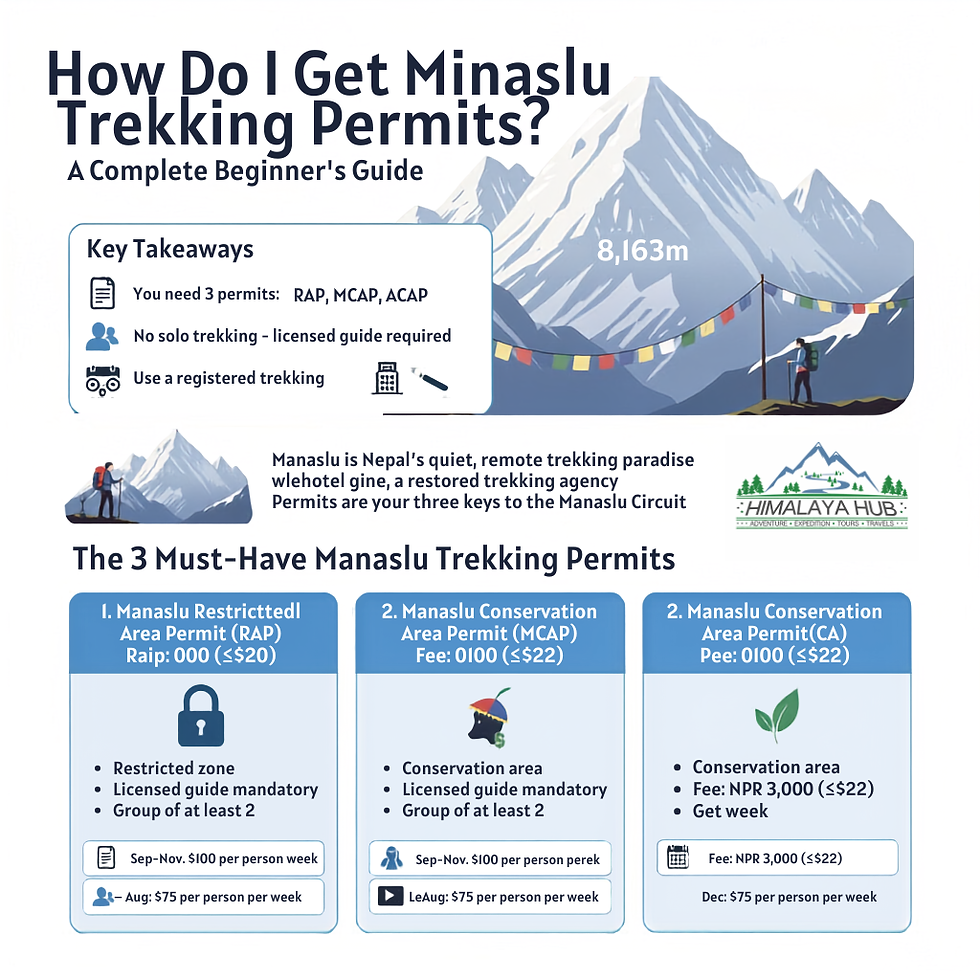
You need 3 permits, not just one – Manaslu trekking requires three separate permits: the Restricted Area Permit (RAP), the Manaslu Conservation Area Permit (MCAP), and the Annapurna Conservation Area Permit (ACAP). Missing even one can get you turned back at a checkpoint.
Solo trekking is not allowed – Manaslu is a restricted zone, which means you must trek with a licensed guide and have at least 2 people in your group. This is a legal requirement, not just a suggestion, so plan accordingly before you arrive in Nepal.
A trekking agency makes everything easier – Instead of running around Kathmandu to different offices, booking a registered trekking agency lets them handle all your permit paperwork for you. It saves time, reduces stress, and ensures nothing gets missed.
Season timing affects both experience and cost – October is the single best month to go with clear skies, stable weather, and stunning views. Permit fees are also slightly higher during peak season (September–November) at $100/week versus $75/week in the off-season, so timing affects your budget too.
Budget around $144–$172 just for permits – Many trekkers underestimate the permit costs. Before adding guides, food, and accommodation, you're already spending roughly $144–$172 on permits alone. Planning your full budget early, estimated at $800–$1,500 total, prevents nasty surprises on the road.
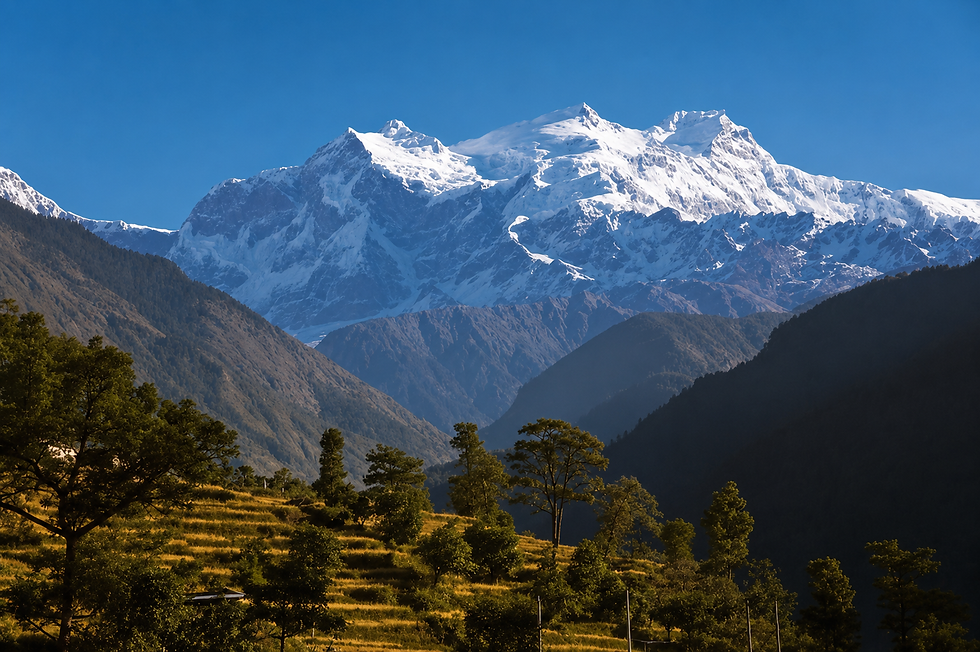
Imagine standing at the foot of one of the tallest mountains in the world, a massive, snow-capped peak that touches the clouds and has barely been touched by tourism. That's Manaslu for you. At 8,163 meters (26,781 feet), Mount Manaslu is the eighth highest mountain on Earth, and it sits right in the heart of Nepal.
While most people rush to trek around Everest, Manaslu remains a quiet, remote paradise for adventurers who want something truly special. The trails are less crowded, the scenery is breathtaking, and the local culture feels deeply authentic. But here's the catch before you lace up your boots, you need to sort out your Manaslu trekking permits.
Don't worry! Getting your permits might sound complicated, but this guide breaks it all down in simple steps. By the end, you'll know exactly what to do.
Why Do You Need Permits for Manaslu Trekking?
Nepal protects its mountain regions through a permit system. These permits serve three big purposes:
Conservation → They help protect the natural environment around Manaslu.
Safety → Authorities can track trekkers in remote areas.
Community support → Permit fees fund local communities and infrastructure.
Because Manaslu is in a restricted area, it requires more paperwork than regular treks. But it's totally worth it!
The 3 Must-Have Manaslu Trekking Permits
To legally trek the Manaslu Circuit, you need three separate permits. Think of them like three keys that unlock the trail.
1. Manaslu Restricted Area Permit (RAP)
This is the most important permit for Manaslu trekking. The Manaslu region is classified as a restricted zone by the Nepali government, which means you can't enter without official permission.
Key facts about the RAP:
You must trek with a registered guide. Solo trekking is not allowed.
You need to be in a group of at least 2 people.
Fees vary by season:
September–November (peak season): USD $100 per person per week
December–August (off-season): USD $75 per person per week
2. Manaslu Conservation Area Permit (MCAP)
The trek passes through the Manaslu Conservation Area, a protected natural zone home to rare wildlife like snow leopards, red pandas, and Himalayan thar.
Cost: NPR 3,000 (approximately USD $22)
Available at the Nepal Tourism Board office in Kathmandu or Soti Khola.
3. Annapurna Conservation Area Permit (ACAP)
The final stretch of the Manaslu Circuit crosses into the Annapurna Conservation Area near Dharapani. That's why you also need an ACAP.
Cost: NPR 3,000 (approximately USD $22)
Available at the same offices as the MCAP.
Where Can You Get Your Manaslu Trekking Permits?
Getting your permits is easier than it sounds! Here's where to go:
Option 1: Nepal Tourism Board (NTB) Office, Kathmandu The main office is located in Pradarshani Marg, Kathmandu. This is the best place to get all three permits at once.
Option 2: Through a Registered Trekking Agency Since a licensed guide is required anyway, many trekkers let their trekking agency handle all the permits. This is by far the easiest option. Your agency fills out the forms, collects the fees, and delivers everything to you. Win-win!
Option 3: Department of Immigration, Kathmandu The Restricted Area Permit can also be processed here if the NTB is not available.
Step-by-Step: How to Apply for Manaslu Trekking Permits
Here's a simple numbered guide to follow:
Book a licensed trekking agency or guide → This is mandatory. Pick a reputable company registered with the Trekking Agencies' Association of Nepal (TAAN).
Prepare your documents:
Valid passport (with at least 6 months remaining)
Two recent passport-size photos
Copies of your Nepal visa
Visit the Nepal Tourism Board → in Kathmandu or let your agency submit documents on your behalf.
Pay the permit fees → Have cash (Nepali Rupees or USD) ready. Some agencies accept card payments.
Collect your permits → Usually processed within 1–2 working days.
Keep your permits safe on the trail → You will pass several checkpoints where officials will inspect your documents. Never lose them!
Best Time for Manaslu Trekking
Choosing the right season makes your trek much more enjoyable. Here's a quick breakdown:
Season | Months | Conditions |
Best (Autumn) | September – November | Clear skies, great mountain views |
Good (Spring) | March – May | Warm, rhododendrons in bloom |
Challenging (Winter) | December – February | Cold, high passes can be snowed in |
Avoid (Monsoon) | June – August | Heavy rain, landslide risk |
Most trekkers prefer October as the single best month for Manaslu trekking. The weather is stable, the air is crystal clear, and Manaslu's summit looks absolutely glorious.
How Much Does the Full Manaslu Trek Cost?
Besides the permits, here's a rough idea of total expenses:
Permits (all three): USD $144–$172
Registered guide: USD $25–$35 per day
Porter (optional): USD $15–$25 per day
Teahouse accommodation: USD $5–$15 per night
Meals on the trail: USD $3–$8 per meal
A 14–18 day Manaslu Circuit trek typically costs between USD $800 and $1,500 per person in total, depending on your choices.
Quick Tips for First-Time Manaslu Trekkers
Before you hit the trail, keep these beginner-friendly tips in mind:
Start permit paperwork early →Don't wait until the last minute in Kathmandu.
Acclimatize properly →The trek reaches over 5,100 meters at Larkya La Pass, so take rest days.
Pack light but smart →Layers are your best friend in the mountains.
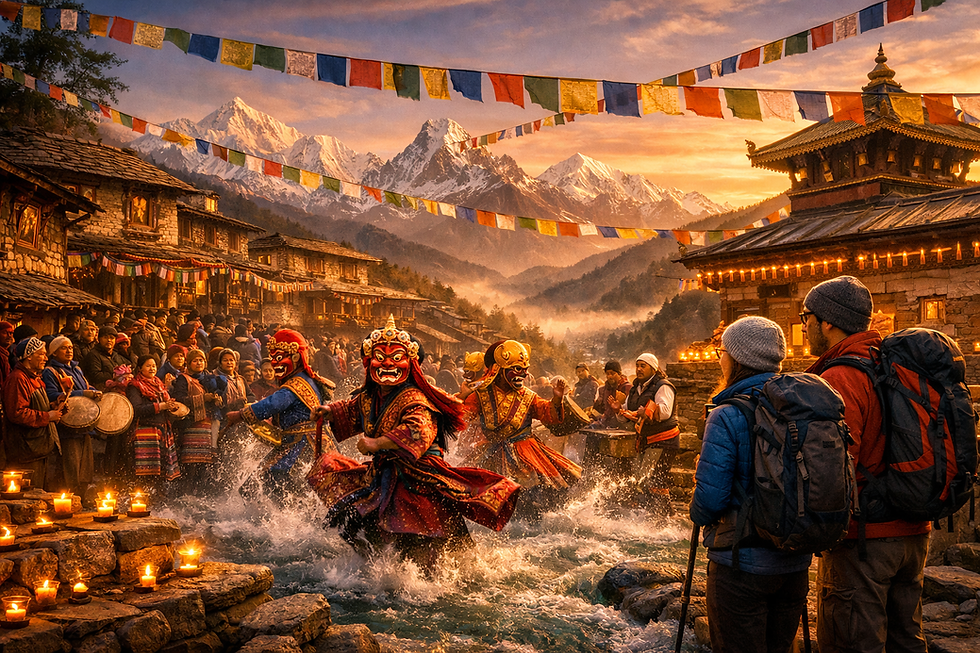
Respect local culture → The Manaslu region is home to Tibetan-influenced communities. Dress modestly and always ask before taking photos.
Get travel insurance → Make sure it covers high-altitude trekking and emergency helicopter evacuation.
Conclusion:
The Manaslu Circuit is one of Nepal's most rewarding treks, a journey through ancient villages, dramatic river valleys, and the jaw-dropping shadow of the world's eighth highest mountain. But the adventure only begins once your paperwork is in order.
To recap, here's what you need to remember about how to get Manaslu trekking permits:
You need three permits: Restricted Area Permit (RAP), Manaslu Conservation Area Permit (MCAP), and Annapurna Conservation Area Permit (ACAP).
A registered guide is mandatory, no solo trekking allowed.
Permits can be obtained from the Nepal Tourism Board or through a licensed trekking agency.
Budget approximately USD $144–$172 for all permits combined.
The best season for Manaslu trekking is September through November.
So, are you ready to experience the magic of Manaslu? Start by connecting with a certified Nepal trekking agency, gather your documents, and take that first exciting step toward the mountains. The trail is waiting and so is one of the greatest adventures of your life!
Frequently Asked Questions (FAQs)
Do I really need three permits for the Manaslu trek?
Yes, absolutely. Every trekker must carry all three permits: the Restricted Area Permit (RAP), the Manaslu Conservation Area Permit (MCAP), and the Annapurna Conservation Area Permit (ACAP). These are checked at multiple checkpoints along the trail, and missing any one of them can result in being turned back or fined.
Can I do the Manaslu trek without a guide?
No, solo trekking is strictly prohibited in the Manaslu region. Nepali government regulations require all trekkers to be accompanied by a licensed guide and trek in a group of at least two people. This rule exists for both safety and conservation reasons and is strictly enforced at permit checkpoints.
Where exactly can I get my Manaslu trekking permits?
You can obtain all three permits from the Nepal Tourism Board (NTB) office in Kathmandu. Alternatively, and most conveniently, a registered trekking agency can handle the entire application process on your behalf, saving you time and paperwork during your stay in Kathmandu.
How much money should I budget for Manaslu trekking permits?
Plan to spend between $144 and $172 on permits alone. The Restricted Area Permit costs $75–$100 per person per week depending on the season, while both the MCAP and ACAP cost around $22 each. This is just the permit cost and does not include your guide, accommodation, or meals.
What is the best time of year to trek the Manaslu Circuit?
The best time for Manaslu trekking is during autumn, specifically September through November, with October being the single most popular month. During this period, the skies are clear, mountain views are at their finest, and trail conditions are at their safest. Spring (March–May) is also a good option, while monsoon season (June–August) is best avoided due to heavy rainfall and landslide risks.
Comments